

The Fine Line Between Caring and Caretaking
We all want to be there for the people we love. Whether it’s offering a listening ear, making a meal, or simply checking in, caring is part of what makes relationships meaningful. But sometimes, especially when someone we care about is struggling, that natural instinct to support others can tip into something more significant.
When helping becomes an obligation, compassion can turn into self-sacrifice. When this happens we can end up feeling like we’re carrying more than a friend, family member or partner usually would.
So how do we tell when caring has crossed the line into caretaking? And what can we do to find a healthier balance?
What’s the Difference Between Caring and Caretaking?
At first glance, caring and caretaking can look very similar. Both involve kindness, empathy, and a willingness to support someone else. The difference lies in where the focus sits. Let’s compare the two:
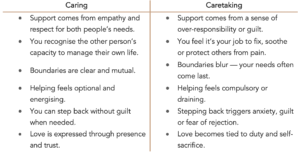
Caretaking can sound like:
- “If I don’t step in, everything will fall apart.”
- “They need me. I can’t say no.”
- “I just want them to be okay, even if it costs me.”
In caretaking, love becomes tied to duty. It can feel like the emotional weight of the relationship rests entirely on your shoulders.
Why We Slip Into Caretaking
Caretaking isn’t a character flaw. It often stems from good intentions and deep empathy. Many people who fall into this pattern grew up learning that love is earned through being useful, responsible, or emotionally attuned to others.
If you’ve had early experiences where keeping the peace or meeting others’ needs felt necessary for connection or safety, that pattern can unconsciously repeat in adulthood.
Caretaking can also arise in times of stress. For example, when a partner is struggling with mental health or a friend is going through a crisis. You might start taking on more and more, convincing yourself it’s “just temporary,” until you realise you’ve been running on empty for months.
It’s not that caring too much is the problem. It’s caring in ways that erase your own needs.
The Hidden Costs of Over-Caring
When caretaking becomes your default mode, several things can happen beneath the surface.
You might:
- Feel anxious or guilty when you try to step back.
- Lose sight of your own feelings and needs.
- Resent the other person for not giving back in the same way.
- Confuse being needed with being valued.
Over time, this dynamic can create imbalance. The other person might unconsciously lean on you more, while you quietly burn out. What began as generosity can turn into exhaustion or even resentment — which neither person wants.
And because caretakers are often highly capable and empathetic, it can take a long time before others even realise you’re struggling.
How to Recognise the Signs in Yourself
You might be slipping into caretaking if:
- You often feel responsible for others’ moods or outcomes.
- You find it hard to say no, even when you’re drained.
- You apologise for needing time or space.
- You feel uneasy when things are calm, as if you need to be “doing” something to maintain connection.
- You take pride in being the strong or reliable one, but secretly feel lonely or abandoned.
These signs don’t mean you should stop caring. They simply suggest it’s time to bring your own wellbeing back into the picture.
Finding a Healthier Balance
Finding balance doesn’t mean becoming detached or uncaring. It’s about reclaiming mutuality. Here are a few ways to start shifting the pattern:
1. Check your motives
Ask yourself: Am I helping because I truly want to, or because I feel I have to? Sometimes we act from fear; fear of being rejected, of letting someone down, or of being seen as selfish. Recognising those fears helps loosen their grip.
2. Share the emotional load
Healthy support means both people can express needs and rely on each other at different times. It’s okay to say, “I’m here for you, but I also need a rest,” or, “Can we find other supports for this too?” (Problem solving might be needed to find additional supports)
3. Practise boundaries with warmth
Boundaries aren’t walls, they’re lines markers of mutual respect. You can care deeply while still saying, “I can’t talk tonight, but I’d love to check in tomorrow.” The message remains: I care about you, and I care about me too. You can learn more about saying ‘no’ here.
4. Allow others to struggle
It can feel painful to watch someone you love make mistakes or suffer. But sometimes the most loving act is to trust their resilience, rather than rushing to rescue them. Growth often happens in discomfort. That said, if the person is in really significant difficulty, see point two above regarding looping in additional supports as needed.
5. Turn some care inward
Ask yourself: What would it look like to give myself the same care I offer others? Rest, boundaries, and self-compassion are not luxuries. They’re what make genuine empathy sustainable.
When Relationships Start to Rebalance
As you begin to pull back from caretaking, relationships might wobble as they adjust to the new status quo. People accustomed to your constant giving may feel confused or even hurt. That’s okay, change takes adjustment on both sides.
Over time, though, you’ll likely notice something freeing: interactions become more reciprocal, honest, and real. You start showing up not because you have to, but because you want to.
And paradoxically, Kristen Neff’s research shows that caring less about being everything for everyone often deepens your capacity for true connection.
Final Thoughts
Healthy caring uplifts both people. Caretaking, however well-intentioned, often depletes one and disempowers the other.
Finding balance means remembering that your wellbeing matters too — not as an afterthought, but as a foundation. When you care from a place of wholeness, not obligation, love becomes lighter, steadier, and far more sustainable.
If you’d like to read more on supporting others, we have a blog on How to Talk to Your Partner About Their Mental Health, as well as How to Be There: Helping Others Cope with Depression. If you are a carer of someone with a chronic condition, Carers Victoria have some excellent resources.